
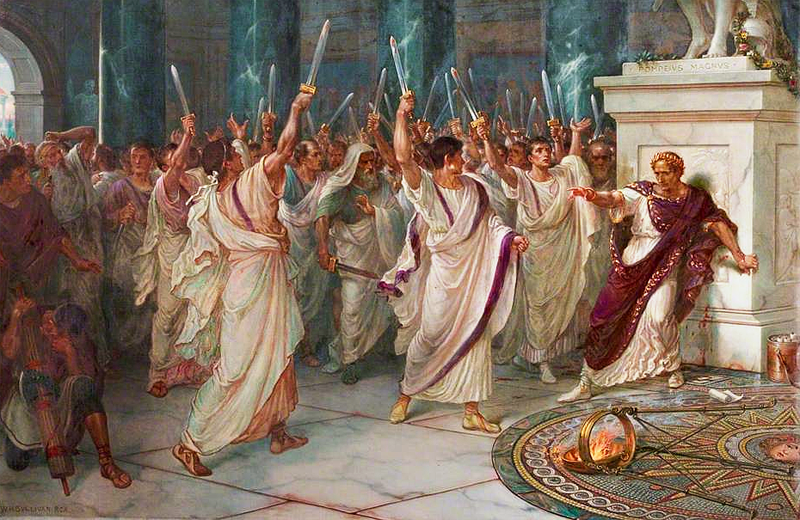
Politics as Blood Sport
Politics, at its most elevated, is the management of disagreement without destruction. At its most degraded, it becomes a contest for dominance – a spectacle in which opponents are not persuaded but wounded, weakened, or eliminated.
The metaphor of blood sport is unsettling, but it is not accidental. Throughout history, the pursuit of power has carried within it a latent violence. Not always immediate, not always physical- but persistent. When power becomes the ultimate objective rather than a means of governance, politics begins to resemble a staged arena. There are spectators. There are contenders. There are victors. And there are those who must fall.
The theater of power thrives on intensity. It rewards aggression, spectacle, and the appearance of strength. Moderation appears weak; compromise appears suspect. In such an environment, ambition is no longer disciplined by responsibility but sharpened by rivalry. Politics becomes zero-sum. The success of one requires the diminishment of another.
This is not new. Human societies have long grappled with the tension between ambition and restraint. Institutions were designed, in part, to domesticate the appetite for dominance – to transform raw competition into regulated contestation. Law, procedure, and norms serve as guardrails. They do not eliminate ambition; they contain it. But containment is fragile. When institutions weaken, or when cultural trust erodes, politics shifts subtly. Opponents cease to be adversaries and become existential threats. Language hardens. Disagreement is framed as betrayal. The moral boundaries that once constrained conduct begin to loosen.
Violence, in this sense, does not begin with weapons. It begins with dehumanization. To portray rivals as enemies of the people, obstacles to destiny, or corrupt embodiments of decay is to prepare the ground. Blood sport requires a narrative in which the other must be defeated not merely politically but morally. The elimination of the opponent becomes justified as preservation of the whole.
In contemporary political life — across diverse systems and geographies — one can observe a quiet normalization of this logic. Public discourse sharpens into hostility. Performance displaces deliberation. Political arenas become stages upon which outrage is amplified and restraint is punished. Victory is celebrated less for what it builds than for whom it humiliates. The violence here may remain symbolic — reputations dismantled, institutions hollowed, norms eroded. Yet symbolic violence alters behavior. It signals that humiliation is acceptable, that aggression is rewarded, that dominance confers legitimacy.
The greed for power is not inherently immoral. Ambition can drive reform, challenge stagnation, and disrupt complacency. But when ambition detaches from ethical limits, it becomes predatory. The objective shifts from governing to conquering. And conquest leaves scars.
Blood sport, by design, produces spectators. Modern media ecosystems intensify this dynamic. Conflict attracts attention; spectacle generates engagement. Politics becomes theatrical not by accident but by incentive. The more dramatic the confrontation, the greater its visibility. This creates a moral distortion. Leaders are encouraged to perform strength rather than practice prudence. Institutions are pressured to respond to outrage rather than uphold process. Public trust becomes collateral damage in a contest that increasingly values dominance over deliberation.
What makes politics as blood sport particularly dangerous is that it erodes legitimacy while claiming to defend it. Power achieved through aggression may consolidate authority temporarily, but it weakens the moral foundations upon which governance rests. Fear can command compliance; it cannot cultivate trust. Cold political anthropology reminds us that violence, in its many forms, is often cyclical. Dominance achieved through force invites retaliation. Suppression breeds resistance. The arena becomes self-perpetuating, each contest intensifying the next. Over time, the theater consumes itself.
Institutions exist precisely to interrupt this cycle. They transform personal ambition into structured competition. They replace physical confrontation with procedural contest. They create rules that allow rivals to coexist within shared boundaries. When those boundaries are respected, politics retains its civic character. When they are disregarded, the arena expands.
One of the ethical challenges of our time is recognizing how quickly rhetoric can slide into moral justification for exclusion. Once an opponent is cast as fundamentally illegitimate, extraordinary measures appear reasonable. The language of necessity becomes a prelude to exceptionalism. The tragedy of blood sport is that it rarely ends with a single victor. Even the triumphant inherit a diminished arena — institutions weakened, trust fractured, civic norms exhausted. The spectacle may energize supporters, but it leaves the political body fatigued.
There is a temptation to view this pattern as inevitable, a permanent feature of human competition. Yet inevitability is often a convenient fiction. Greed for power may be perennial, but the forms it takes are shaped by culture and restraint. Political systems that cultivate ethical boundaries, procedural loyalty, and shared norms reduce the probability that rivalry escalates into hostility. The alternative is not the elimination of conflict. Conflict is intrinsic to politics. The alternative is the preservation of limits.
Politics does not have to be blood sport. But it becomes so when ambition outpaces morality and when institutions fail to discipline desire. The theater of power can either elevate public life or degrade it into spectacle. The choice is rarely dramatic at first. It is incremental — a normalization of harsher language, a tolerance for procedural shortcuts, a celebration of domination disguised as strength.
In the end, the question is not whether power will be contested. It always will be. The question is whether contest remains bounded by ethical commitments that protect both the victor and the defeated. Without those commitments, the arena narrows. The audience grows restless. And the performance intensifies until governance is no longer recognizable as such. Power may thrill in the moment of conquest. But a political order sustained by blood sport ultimately undermines the very authority it seeks to secure.