Invasion: Between Fear and Ambition
Invasion rarely begins as ambition, and it is almost never admitted as fear. It is instead framed as necessity that more or less has everything to do with power and nothing to do with logic. States do not describe their actions as expansion, for instance. They describe them as prevention, stabilization, or response to pressure and violence. Yet the distinction does not hold for long especially when fear and ambition is concerned, given that they do not operate as separate motives. They collapse into one another, and in doing so, produce a logic in which expansion appears both justified and unavoidable. Through the eyes of the past, we can clearly establish the case of invasion as a raw struggle between fear and ambition.
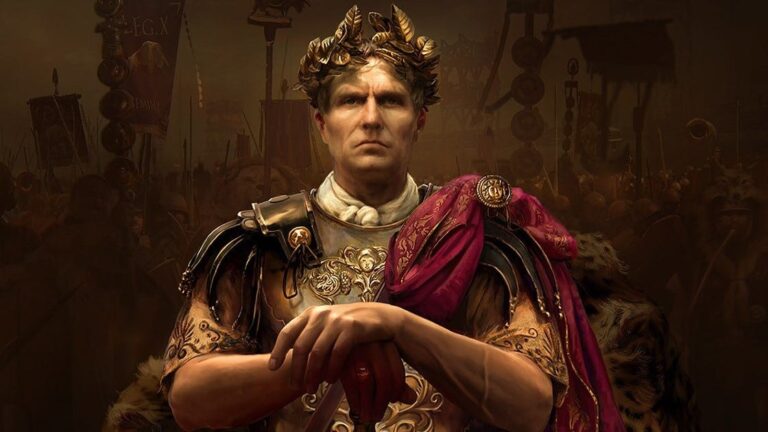
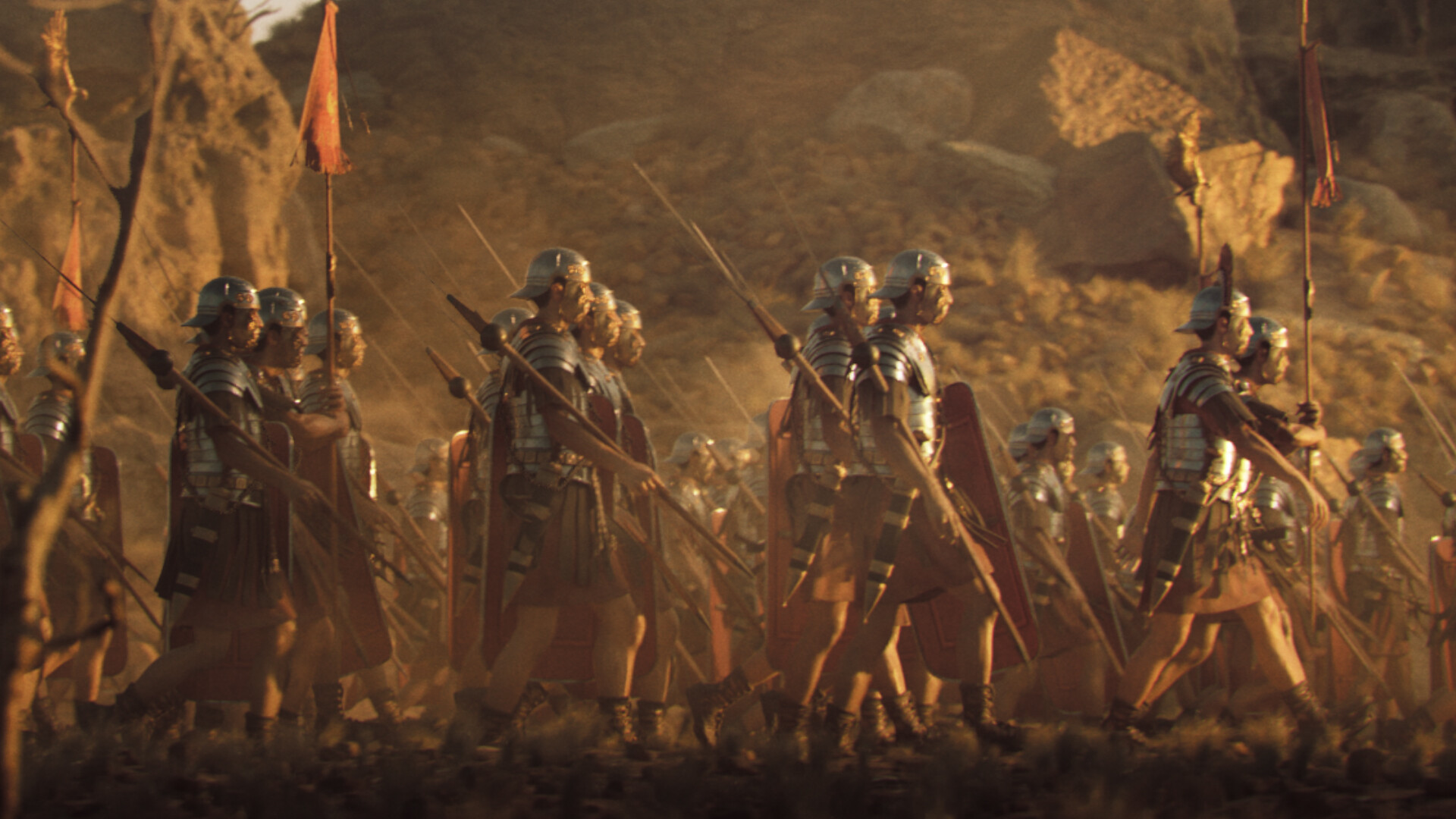
The expansion of the Roman Empire illustrates this convergence with unusual clarity. Rome did not simply conquer because it sought territory, nor because it faced immediate threat. It expanded because the boundary between threat and opportunity became indistinct. A neighboring instability was not tolerated as a distant condition but as a future liability. Intervention followed, and once initiated, it did not remain limited. Under Julius Caesar, campaigns justified as defensive measures produced territorial absorption on a scale that exceeded their original rationale. Fear structured the language of power while ambition determined the outcome.
A similar structure appears in the rise of the Mongol Empire under Genghis Khan, though expressed through speed rather than gradual expansion. Consolidation required movement, while in turn, movement required force. Expansion of the Mongol Empire was not an anomaly but a condition of survival. Entire systems collapsed at the pace of Genghis Khan’s army before they could even respond. Yet destruction alone did not sustain control for the Empire. Trade routes were secured, communication restored, and authority imposed across distance and through proxies. Fear and ambition operated simultaneously within the same structure of expansion.
Invasion reveals less about aggression than about how power understands itself. Where power is conceived as the elimination of threat, expansion appears necessary.
Modern Middle East Through the Eyes of the Past
The early modern Middle East offers a more explicit interplay between fear and ambition. The rise of the Ottoman Empire and the Safavid Empire did not unfold in isolation, but in direct confrontation. Expansion was not simply outward but also relational.
The Ottomans advanced across Anatolia, the Balkans, and into Arab lands with a model that combined military organization with administrative absorption. The use of standing forces such as the Janissaries, and the incorporation of diverse populations into a structured imperial system, allowed expansion to translate into durability. Yet this expansion was not detached from fear. The presence of rival powers, particularly the Safavids to the east and European forces to the west, shaped Ottoman strategy. Control of territory was not only an expression of strength, but a means of preempting encirclement.
The Safavid state, under Shah Ismail I, emerged through a different but equally revealing dynamic. Its consolidation of power in Persia was inseparable from the imposition of a distinct ideological identity. The adoption and enforcement of Twelver Shi’ism was not merely religious, but political. It unified internal structures while differentiating the Safavid domain from its Sunni Ottoman rival. Expansion and conflict, particularly at moments such as the Battle of Chaldiran, were driven as much by strategic competition as by the need to secure internal coherence. Here, fear operated at the level of identity as much as territory. Ambition did not only seek land to secure political power but its very definition.
The Norman Conquest by William the Conqueror
The Norman Conquest of 1066 presents a more contained but equally instructive case. William the Conqueror did not confront a unified system, but one already destabilized by contested succession. His claim to legitimacy did not remove the need for force, but shaped its application. The decisive moment at Hastings was followed immediately by structural consolidation. Land redistribution, elite replacement, and administrative reordering collectively set the condition of success and ultimate victory.
By the early modern period, invasion becomes less visible in its initial phase. European expansion often appeared first as trade, then as influence, and only later as control. The British East India Company did not begin as a sovereign authority, yet it gradually assumed one. Economic presence produced political leverage, and leverage produced governance regimes that mostly aimed at replacing tribal and cultural rules, especially claims to indigenous land. Ambition here is explicit, tied to resources and competition among European powers. Yet it is also conditioned by fear. In other words, to not expand was to risk exclusion. As such, expansion became systemic and the identity of survival.
Expansion continues beyond the point at which it could be maintained.
Invasions and the Limits of Political Ambition
Modern invasions expose the limits of this convergence without resolving it. The campaigns of Napoleon Bonaparte into Russia, and later the German invasion under Adolf Hitler, demonstrate how quickly expansion can exceed its own conditions. Both combined strategic necessity with dominance. Also, both achieved initial military success, and yet neither translated that success into sustained control or popular support for the invader. Geography, logistics, and resistance disrupted the transition from force to structure. Expansion continued beyond the point at which it could be maintained.
Across these cases, the decisive variable is not motive, but outcome. Invasion succeeds not when it advances, but when it stabilizes. Military victory produces access, though it does not generate order. Rome endured because it institutionalized. The Mongols consolidated what they disrupted. The Ottomans governed what they absorbed. The Safavids defined what they unified. The Normans reorganized what they seized. European empires restructured economic and administrative systems. Where this transition fails, invasion collapses into occupation, and occupation into resistance.
Invasion reveals less about aggression than about how power understands itself. Where power is conceived as the elimination of threat, expansion appears necessary. Where it is understood as the organization of systems, expansion becomes only the initial stage of a more complex process. The failure to recognize this difference is not theoretical. It is historical. And it remains unresolved.
This reflection draws on a broader historical and theoretical tradition on war, empire, and power.
References
Abu-Lughod, Janet L. Before European Hegemony: The World System A.D. 1250–1350. Oxford University Press, 1989.
Barkey, Karen. Empire of Difference: The Ottomans in Comparative Perspective. Cambridge University Press, 2008.
Dale, Stephen F. The Muslim Empires of the Ottomans, Safavids, and Mughals. Cambridge University Press, 2010.
Diamond, Jared. Guns, Germs, and Steel: The Fates of Human Societies. W. W. Norton & Company, 1997.
Finkel, Caroline. Osman’s Dream: The History of the Ottoman Empire. Basic Books, 2005.
Hanson, Victor Davis. Carnage and Culture: Landmark Battles in the Rise of Western Power. Anchor Books, 2001.
Keegan, John. A History of Warfare. Vintage Books, 1993.
Kennedy, Paul. The Rise and Fall of the Great Powers: Economic Change and Military Conflict from 1500 to 2000. Random House, 1987.
McNeill, William H. The Rise of the West: A History of the Human Community. University of Chicago Press, 1963.
Parker, Geoffrey. The Military Revolution: Military Innovation and the Rise of the West, 1500–1800. Cambridge University Press, 1996.
Savory, Roger. Iran Under the Safavids. Cambridge University Press, 2007.
Turchin, Peter. War and Peace and War: The Life Cycles of Imperial Nations. Pi Press, 2006.