Re-emergence of imperial memory between Turkey and Iran
The present insists on its own novelty. It frames its crises as self contained, detached from deeper continuities. A potential war involving the United States, Israel, and Iran is often interpreted in this way, reduced to questions of deterrence, nuclear capability, and shifting alliances. Such a reading is not incorrect, but it is incomplete. It remains confined to the surface of events and neglects the deeper structures that shape how certain states perceive and exercise power. In the Middle East, popular opinion wants the global audience to believe in the perception that it is US, Israel, Gulf States, or even non-state actors that control and shape the region’s future.
In most cases, this perspective fails to acknowledge the very modern history of imperial power that fundamentally changed the Middle East (which is also a phrase coined by colonial power). To this day, the imperial powers like the Ottoman Empire and Safavid Empire continue to shape the region and beyond. The question is, why does Turkey and Iran’s relationship cannot be fully deciphered in the contemporary world? Allies or enemies or none?
The relationship between Turkey and Iran cannot be understood solely within the vocabulary of contemporary geopolitics. It is structured by a longer historical continuity that predates the modern state system. Both are successors to imperial formations that did not merely control territory, but defined competing orders across the same geographical space. The Ottoman and Safavid empires were not adjacent powers that occasionally collided.
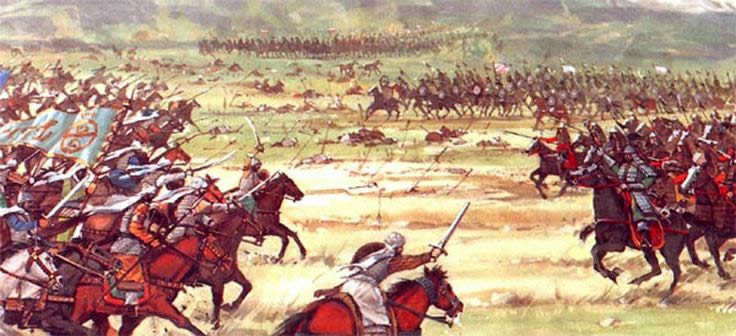
They were enduring rivals whose conflict was embedded in geography, doctrine, and claims to legitimacy. Their confrontation at the Battle of Chaldiran in 1514 was not only a military engagement, but a decisive articulation of two distinct political and ideological orders. Selim I and Shah Ismail did not simply command armies. They embodied incompatible visions of authority that could not be easily reconciled.
This rivalry did not dissolve with time. It was stabilized without being resolved. The frontier that extended across Iraq, eastern Anatolia, and the Caucasus became a persistent zone of interaction where influence remained contested. The Treaty of Zuhab in 1639 formalized territorial boundaries, yet it did not eliminate the underlying duality. It established a durable equilibrium, but one that preserved the structural conditions of rivalry. What emerged was not peace in a definitive sense, but a managed coexistence within a framework of enduring competition.
Modern Turkey and Iran operate within a different international order, yet their strategic behavior continues to reflect this historical inheritance. Their engagement in Iraq, Syria, and the Caucasus is not incidental. These regions correspond closely to the earlier zones of imperial overlap. The persistence of these geographical focal points suggests that the logic of interaction has not fundamentally changed. Geography continues to impose constraints and opportunities that shape political action across centuries.
A large scale war involving Iran would not create this dynamic, but it would intensify it. War disrupts established orders and generates spaces of uncertainty where authority weakens or collapses. In such conditions, states are compelled to act beyond routine calculations. Their responses are shaped not only by immediate interests, but by deeper orientations that have been formed over time. Turkey’s inclination to expand influence under conditions of regional instability and Iran’s reliance on networks of aligned actors are not improvised strategies. They reflect accumulated patterns of political practice that have historical depth.
The language of modern strategy often obscures this continuity. It describes interests, capabilities, and alignments, yet it rarely addresses the underlying frameworks through which these elements are interpreted. Empires did not only project power. They constructed enduring conceptions of order and legitimacy. These conceptions do not disappear with the decline of imperial institutions. They persist in altered forms within the states that succeed them. Turkey and Iran continue to operate within such frameworks, even as they formally adhere to the norms of the contemporary international system.
This does not imply a return to classical forms of imperial conflict. The constraints imposed by economic interdependence, global institutions, and external powers are substantial. Direct confrontation remains unlikely. Historical precedent itself suggests that prolonged rivalry can produce stable arrangements, as evidenced by the settlement established in the seventeenth century. The significance of this precedent lies not in the absence of conflict, but in its transformation into a regulated and enduring competition.
What is more likely is the continuation of a form of rivalry that is less visible yet structurally consistent with its historical antecedents. Influence will be contested indirectly, through political alignment, proxy engagement, and strategic positioning in regions where authority remains fragmented. This mode of interaction does not culminate in decisive resolution. It persists because the conditions that sustain it remain in place.
A major war would not initiate a new relationship between Turkey and Iran. It would render visible a continuity that is often obscured by the language of modern statehood. It would demonstrate that beneath contemporary frameworks, older logics continue to inform how power is understood and exercised. These logics are not relics. They are active, though often unacknowledged.
The question, therefore, is not whether the past will repeat itself. It is whether it has ever ceased to structure the present in the first place.
References
Amanat, A. (2017). Iran: A Modern History. Yale University Press.
Axworthy, M. (2013). A History of Iran: Empire of the Mind. Basic Books.
Faroqhi, S. (2004). The Ottoman Empire and the World Around It. I.B. Tauris.
İnalcık, H. (1973). The Ottoman Empire: The Classical Age 1300–1600. Praeger.
Keddie, N. R. (2006). Modern Iran: Roots and Results of Revolution. Yale University Press.
Matthee, R. (2012). Persia in Crisis: Safavid Decline and the Fall of Isfahan. I.B. Tauris.
Newman, A. J. (2006). Safavid Iran: Rebirth of a Persian Empire. I.B. Tauris.
Roemer, H. R. (1986). The Safavid Period. In The Cambridge History of Iran (Vol. 6). Cambridge University Press.
Soucek, S. (2000). A History of Inner Asia. Cambridge University Press.