Understanding the Blonde Beast
The phrase “the blonde beast” comes from the philosophy of Friedrich Nietzsche, and it appears most notably in his book On the Genealogy of Morality. Nietzsche used “the blonde beast” to describe a type of human being, not a race or ethnicity.
He was pointing most basically to a powerful, instinct-driven individual- someone who lives beyond conventional morality. the blonde beast is a figure known by its strength, vitality, and dominance. He/she is also a person who does not feel guilt in the way modern moral systems expect.
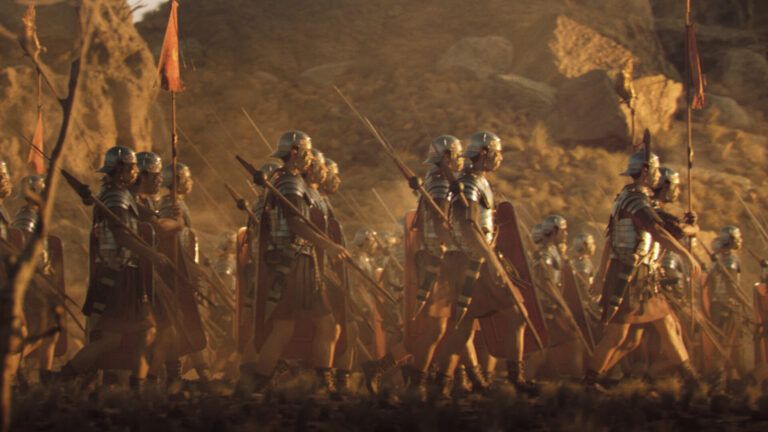
This “beast” represents what Nietzsche saw in ancient warrior aristocracies, especially among early Indo-European elites, who imposed their values rather than submitting to imposed moral rules. the deeper philosophical idea in Nietzsche’s framework refer to two broad moral systems including the master morality and the slave morality.
The master morality is created by the strong, who define “good” as power, excellence, and nobility while the slave morality is created by the weak, who redefine “good” as humility, kindness, and obedience. The “blonde beast” symbolizes the master morality type as someone who creates values instead of inheriting them.
The question that follows is not whether we are more moral than those who came before us, but whether we are more aware of the forces that shape our sense of morality.
Understanding Nietzsche’s framework, namely “the blonde beast” with regards to modern society is important not because we need more “beasts,” but because we need to understand what happens when power, morality, and language drift apart. If anything, Nietzsche’s blonde beast metaphor exposes how morality is often constructed in society rather than given. Specifically, when Friedrich Nietzsche contrasts “master” and “slave” moralities, he is forcing a difficult realization- the one that we call good and evil, which is not always universal truth, but often the outcome of historical struggles over power.
I see this dynamic play out in modern society almost everywhere. For instance, political actors frame their interests as moral necessities, and nations justify war in the language of justice or security. Without awareness, people confuse moral language with moral truth.
More importantly, the “blonde beast” is not just a person. It represents a stage before moral justification is required. Modern actors, however, cannot act like that openly. So they do something else which is translating power into morality. Listen to the language they speak and you will understand how they use moral language as a tool. A strategic interest becomes a “defense of values” or a geopolitical move becomes a “moral obligation” or violence becomes “necessary” or “justified.” Nietzsche helps us see that this is not accidental but inherently structural.
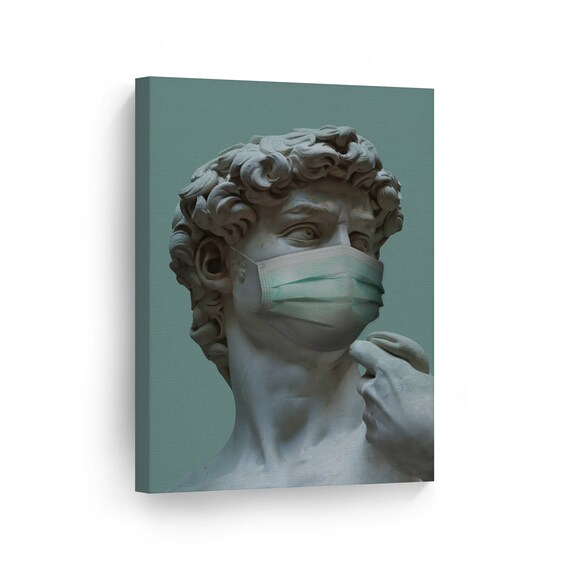
The question here is not whether we need to understand the blonde beast for the sake of society or morality. Rather, we must understand the blonde beast to challenge the illusion of moral innocence and the mask of our modern age.
Nietzsche does not ask us to return to the age of the beast, nor does he suggest that the absence of moral constraint is desirable. What he reveals instead is the cost of forgetting how morality is formed, how it is used, and how it can be mobilized in ways that obscure rather than clarify. The point is not to abandon morality, but to see it more clearly, to recognize when it illuminates and when it conceals, and to resist the comfort of assuming that moral language guarantees moral truth.
To understand the “blonde beast” today is therefore to understand a paradox at the heart of modern society. We have not eliminated power, but we have transformed its appearance. We have not transcended domination, but we have learned to narrate it differently. The absence of visible force does not mean the absence of force itself. It may instead indicate a more sophisticated form of its operation, one that relies not on the display of strength but on the management of perception.
The question that follows is not whether we are more moral than those who came before us, but whether we are more aware of the forces that shape our sense of morality. If the past was marked by the openness of power, the present may be marked by its concealment, and concealment carries its own risks, for what is unseen is rarely questioned, and what is not questioned is easily accepted.