Skip to content
  • Home
  • Perspectives
  • About
  • Conversations
  • The Agoge and Spartan Statecraft: Was it Truly Unbreakable?
    History and Politics & World Order | Philosophy & Thought

    The Agoge and Spartan Statecraft: Was it Truly Unbreakable?

    ByNoor Omer April 18, 2026April 25, 2026

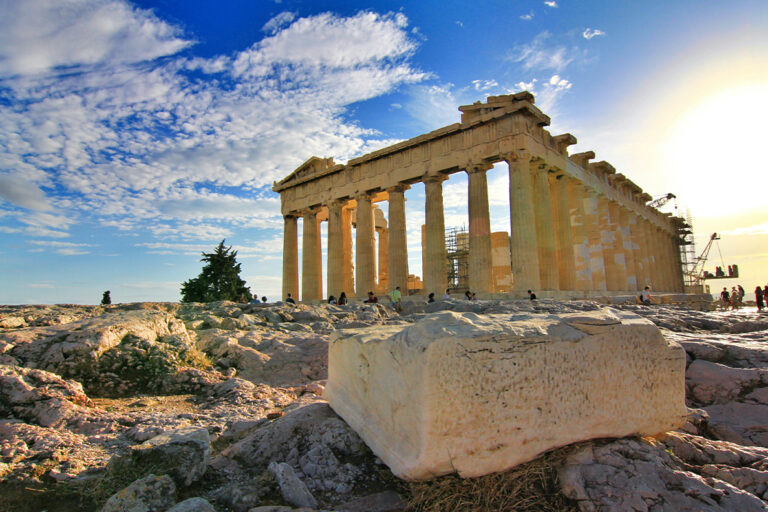
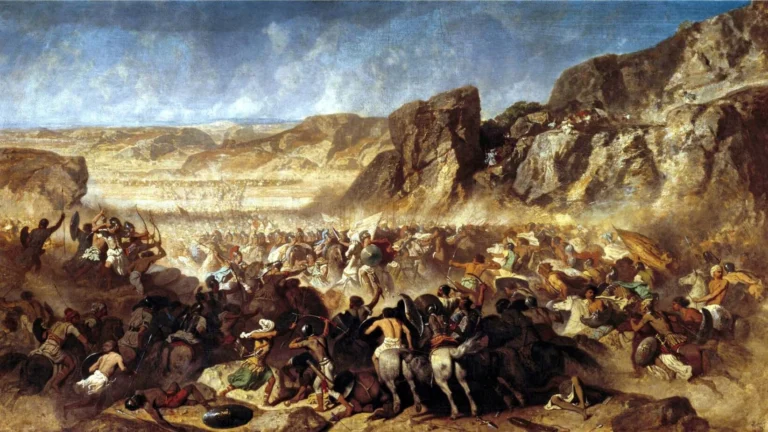
    The Rise of Spartan Thinking can be clearly seen among modern militaries who forge obedience, train for loyalty, but fail at change and adaptation. The Spartan model of power was formed through a simple but foundational political order: the Agoge. The Agoge is not to be confused with a “political school” in the way we…

    Read More The Agoge and Spartan Statecraft: Was it Truly Unbreakable?Continue

  • Why the United States Military Remains Structurally Dominant
    AI & Life | History and Politics & World Order

    Why the United States Military Remains Structurally Dominant

    ByNoor Omer April 17, 2026April 25, 2026

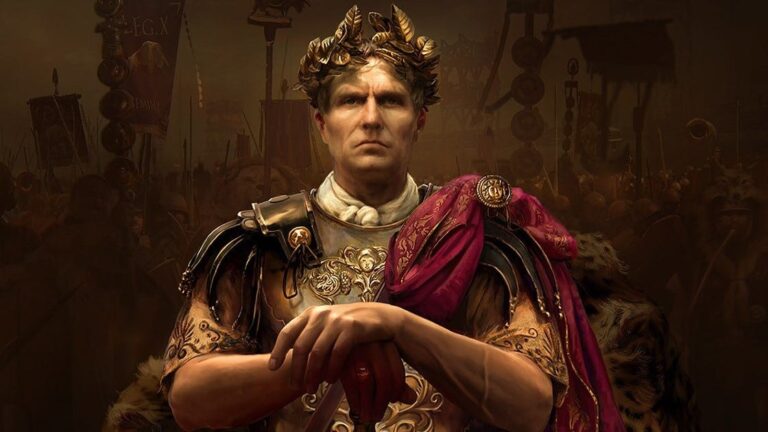
    To describe the United States military as the strongest in the modern world is not simply to point to its size or its technology. Strength, in this context, is not a single attribute but reference to a solid structure. It emerges from the interaction of multiple dimensions that reinforce one another, forming a system that…

    Read More Why the United States Military Remains Structurally DominantContinue

  • Re-Emergence of Imperial Memory between Turkey and Iran
    History and Politics & World Order | Reflections & Review

    Re-Emergence of Imperial Memory between Turkey and Iran

    ByNoor Omer April 8, 2026April 25, 2026

    The present insists on its own novelty. It frames its crises as self contained, detached from deeper continuities. A potential war involving the United States, Israel, and Iran is often interpreted in this way, reduced to questions of deterrence, nuclear capability, and shifting alliances. Such a reading is not incorrect, but it is incomplete. It…

    Read More Re-Emergence of Imperial Memory between Turkey and IranContinue

  • Al-Farabi’s Virtuous City and Radical Political Thought
    History and Politics & World Order | Reflections & Review

    Al-Farabi’s Virtuous City and Radical Political Thought

    ByNoor Omer April 4, 2026April 25, 2026

    For anyone interested in politics and philosophy, there must be an understanding that we do not study these fields only to learn from them, but also to teach others how to think about power. The purpose is not to accumulate passive knowledge, but to raise awareness around virtues and vices of life. When we speak…

    Read More Al-Farabi’s Virtuous City and Radical Political ThoughtContinue

  • Invasion: Between Fear and Ambition
    History and Politics & World Order | Reflections & Review

    Invasion: Between Fear and Ambition

    ByNoor Omer March 31, 2026April 25, 2026

    Invasion rarely begins as ambition, and it is almost never admitted as fear. It is instead framed as necessity that more or less has everything to do with power and nothing to do with logic. States do not describe their actions as expansion, for instance. They describe them as prevention, stabilization, or response to pressure…

    Read More Invasion: Between Fear and AmbitionContinue

  • The Case Against War
    History and Politics & World Order | Reflections & Review

    The Case Against War

    ByNoor Omer March 25, 2026April 25, 2026

    There are men who say that war is a necessity, as though necessity were a law of nature and not a confession of failure. They speak of defense and honor and survival, and in their speech there is the comfort of order, as if by naming a thing just they have already made it so….

    Read More The Case Against WarContinue

  • From the Caucus to the Balkans: Who Are the People Celebrating Newroz?
    History and Politics & World Order

    From the Caucus to the Balkans: Who Are the People Celebrating Newroz?

    ByNoor Omer March 21, 2026April 25, 2026

    Newroz is a ritual of renewal that carries within it layers of myth, resistance, seasonal change, and civilizational continuity stretching back thousands of years. From the Caucasus to the Balkans, and across the Persian plateau into Central and South Asia, Newroz endures as one of the most quietly powerful cultural inheritances in human history. At…

    Read More From the Caucus to the Balkans: Who Are the People Celebrating Newroz?Continue

  • Technology and Invention of the Human Empire
    AI & Life | History and Politics & World Order

    Technology and Invention of the Human Empire

    ByNoor Omer March 5, 2026April 25, 2026

    Institutions have always depended on systems of knowledge and administration. Empires recorded taxes on clay tablets, kingdoms relied on scribes and archives, and modern states built bureaucracies capable of organizing vast amounts of information. Governance has therefore never been purely political as it has always relied on technologies that allow authority to operate across distance,…

    Read More Technology and Invention of the Human EmpireContinue

  • The 48 Laws of Power and The Question of Fitness
    History and Politics & World Order | Reflections & Review

    The 48 Laws of Power and The Question of Fitness

    ByNoor Omer March 2, 2026April 25, 2026

    Reflections on The 48 Laws of Power by Robert Greene There is something unsettling about how convincing The 48 Laws of Power feels. Robert Greene does not describe power as an abstract ideal or a constitutional arrangement. He presents it as choreography. Every gesture, silence, alliance, and display becomes part of a calculated performance. Power,…

    Read More The 48 Laws of Power and The Question of FitnessContinue

  • The Medici Way of Life: Reputation, Networks, and Power Struggles
    History and Politics & World Order | Reflections & Review

    The Medici Way of Life: Reputation, Networks, and Power Struggles

    ByNoor Omer March 1, 2026April 25, 2026

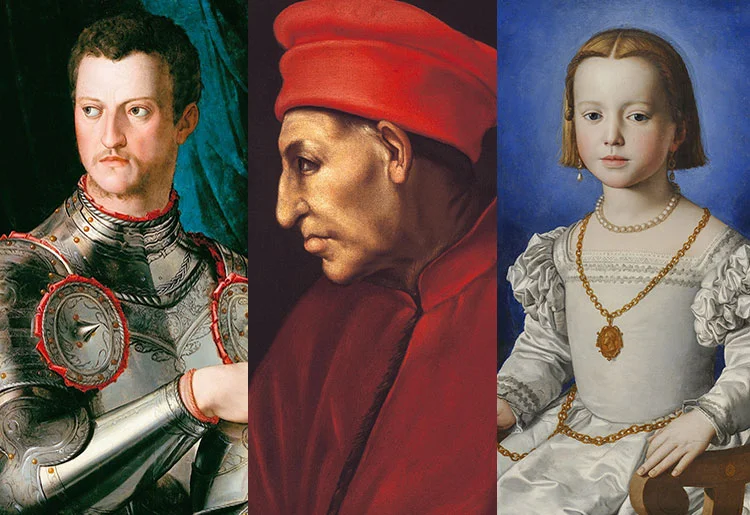
    Reflections on Medici Money by Tim Parks What I learned from Medici Money is that wealth alone does not create rule. Coordination does. Legitimacy does. Cultural embedding does. The Medici mastered the interplay between finance, reputation, art, and religion. They understood that to be seen as princely, one must first become necessary. In fourteenth century…

    Read More The Medici Way of Life: Reputation, Networks, and Power StrugglesContinue

The Thinking State
Independent perspectives on governance, technology, institutions and political imagination.
Based in Iraq · Writing in English
  • Portfolio
  • About
  • Contact

Editorial inquiries: noor@thethinkingstate.com

  • Twitter
  • LinkedIn

© 2026 The Thinking State. All rights reserved.

Scroll to top
  • Home
  • Perspectives
  • About
  • Conversations