The March of the Ten Thousand: The Story of the Kurds in Xenophon’s Anabasis
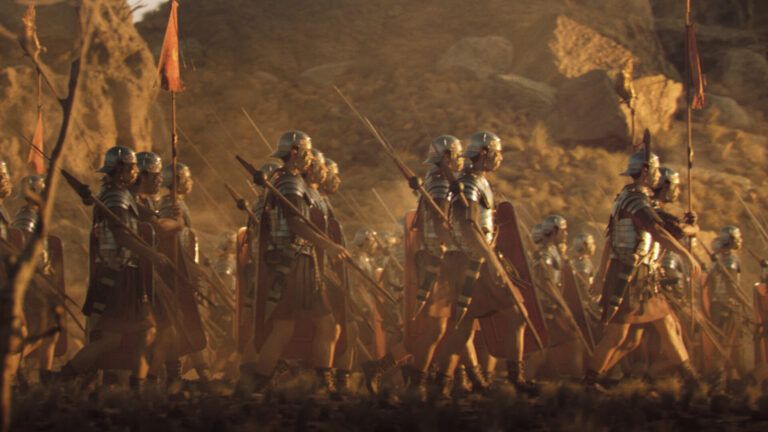
In 401 BCE, a Greek mercenary army of roughly 10,000 soldiers found itself stranded deep in enemy territory after the failure of a Persian dynastic coup. Their leader had been killed and they were surrounded. Their only way home was north through the mountains. And what they met there changed history’s record forever.
The Greek mercenaries had been hired by Cyrus the Younger to help him seize the Persian throne from his brother Artaxerxes II. Cyrus was killed at the Battle of Cunaxa near modern Baghdad, and the Greeks suddenly had no employer, no allies, and no safe route home. Their epic northward retreat through Anatolia toward the Black Sea was recorded by the Athenian soldier-historian Xenophon in his masterwork, the Anabasis (“The March Up-Country”).
Xenophon’s Anabasis
When the Greeks reached the Zagros mountain passes of what is today northern Iraq and southeastern Turkey, they encountered the Carduchians (Καρδοῦχοι, Kardoûkhoi). Xenophon’s account highlights several significant indicators about the Carduchians.
First, he mentions that the Carduchians were not subjects of the Persian Empire. Despite Persia controlling everything around them, these mountain people had maintained their independence, which is a detail Xenophon notes with clear surprise.
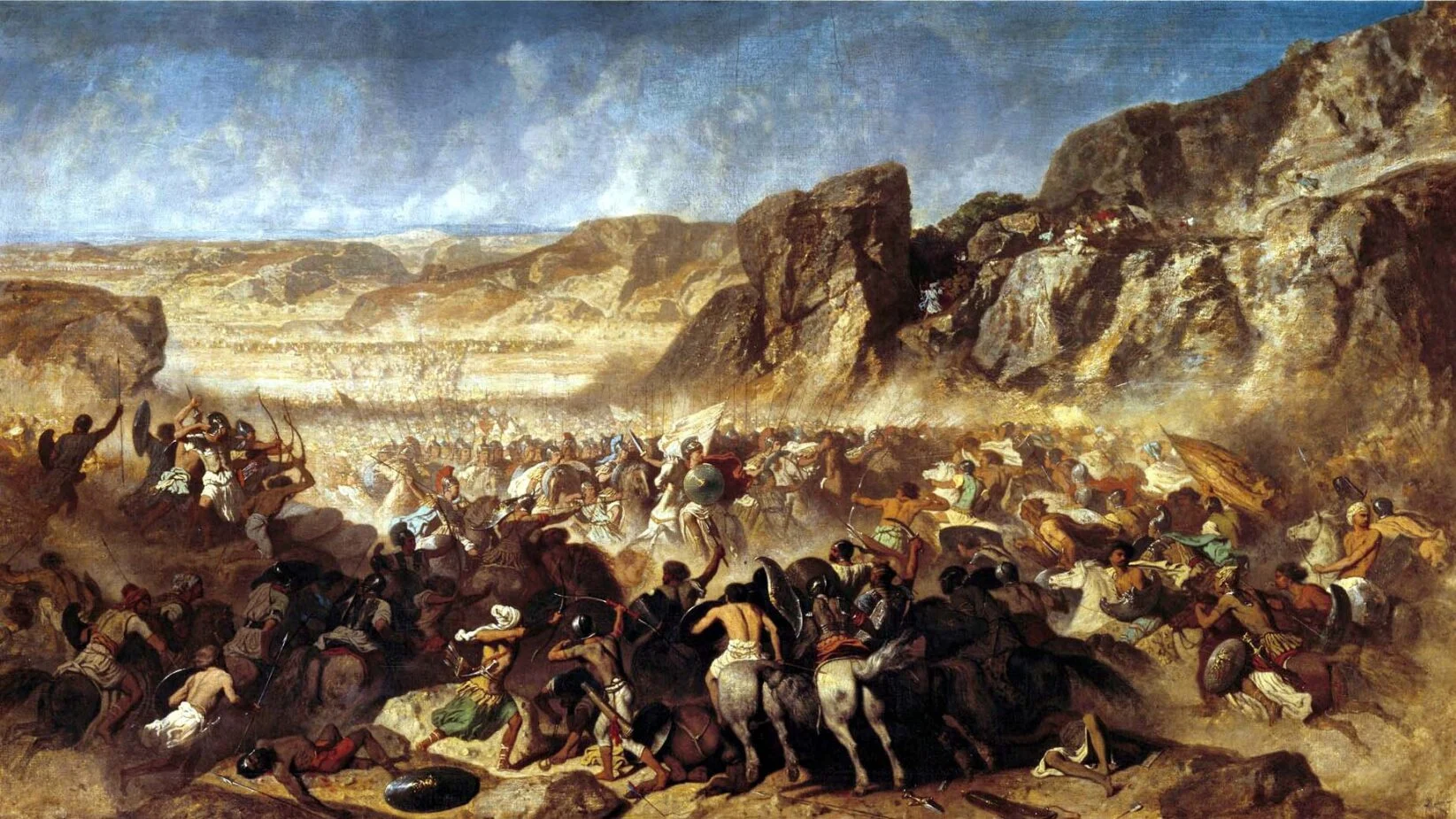
Second, the Carduchians were ferocious fighters, using longbows and slings with devastating accuracy in terrain they knew intimately. The Greeks, veterans of open-field hoplite warfare, were completely outmatched in the narrow mountain passes. Xenophon also mentions the Carduchians’ methods of communication at night, particularly “lighting beacons on mountains as signals to each other.”
Third, the seven days crossing Carduchian territory were described by Xenophon as harder and more costly than any battle they had fought against Persia itself. The Greeks suffered constant ambushes, rockslides, and arrow fire from above. They had no cities the Greeks could threaten so they melted into their mountains, immune to the tactics that worked on lowland armies.
Xenophon didn’t know he was writing the opening line of one of history’s longest continuous stories. But in describing those seven terrible days in the mountains, he captured something essential about Kurdish history that would echo for the next 2,400 years. And that is: these are a mountain people who do not yield easily.
The Political Status of the Carduchians and Their Way of Life
The Carduchi were probably subjugated by Cyrus the Great (r. ca. 558–529 BCE), but they frequently rebelled against the Achaemenids, and by the end of the 5th century BCE, under Artaxerxes II (r. 405–359), they were no longer under Persian control. They even defeated a large army sent against them and at times concluded treaties with Persian satraps (Anabasis 3.5.16).
Sometime after 401 BCE, the Carduchii expanded their authority into the northern Tigris valley. Between 165–95 BCE, they established the independent kingdom of Gordyene, seemingly as a result of the power vacuum following the weakening of the Seleucid Empire.
Xenophon’s account provides insight into their everyday life as well. He writes that the Carduchians lived in villages stocked with abundant corn, aged wines, and bronze vessels, evidence of settled agricultural life rather than nomadic wandering. Their skill with bows and slings was carefully honed to exploit the defensive advantages of their rugged terrain. This is why they were an independent force that the most powerful state in the world had simply decided wasn’t worth the cost of conquering, as per Xenophon’s account.
The Scholarly Debate on the Kurdish Connection
There is still scholarly debate over who exactly the Carduchians were and whether they were actually Kurds.
Many historians, including George Rawlinson, link these ancient mountain tribes with the peoples who later became known as Kurds, citing the striking geographic continuity and the evolution of regional names. Terms like “Karduchoi,” “Corduene,” and later medieval forms such as Beth Qardu appear repeatedly across centuries, all referring to peoples inhabiting the same rugged heartland.
19th-century scholars such as George Rawlinson identified Corduene and Carduchi with the modern Kurds, considering that Carduchi was the ancient lexical equivalent of “Kurdistan.” This view is supported by some recent academic sources which have considered Corduene as proto-Kurdish.
The dissenting view is also worth mentioning. While some believe the Kurds are the descendants of the Carduchii, other scholars argue it is far more likely that the Kurds descend from the Cyrtians, who appear in the works of Polybius, Livy, and Strabo.
The geographer Strabo, writing roughly 300 years after Xenophon, put it this way: “Near the Tigris lie the places belonging to the Gordyaeans, whom the ancients called Carduchian, and their cities are named Sareisa and Satalca and Pinaca, a very powerful fortress, with three citadels, each enclosed by a separate fortification of its own.
The Iranologist and Kurdologist Garnik Asatrian considers the Carduchii to have been an indigenous pre-Indo-European people inhabiting the area before Indo-Aryan migrations. This would actually complicate a direct Kurdish link, since Kurds speak an Indo-Iranian language.
The biggest takeaway from the scholarly debate is that the geographic link is very strong, the name evolution is plausible, but the ethnic and linguistic continuity between the Carduchians and modern Kurds remains an open question, largely because ancient ethnonyms were applied loosely and the region saw many population layers over the centuries.
References
Xenophon. (1922). Anabasis (C. L. Brownson, Trans.). Harvard University Press. https://www.perseus.tufts.edu/hopper/text?doc=Perseus:text:1999.01.0202 (Original work composed ca. 370 BCE).
Aristopoulos, D. (2026, March 5). Ancient Greeks clash with Kurds in the Zagros Mountains. Greek Reporter. https://greekreporter.com/2026/03/05/ancient-greeks-clash-kurds-zagros-mountains/.
Dandamayev, M. (1990). Carduchi. In E. Yarshater (Ed.), Encyclopædia Iranica (Vol. IV, Fasc. 7, p. 806). Encyclopædia Iranica Foundation. https://www.iranicaonline.org/articles/Carduchi-latin-form-of-greek-kardokhoi
Mofidi, S. (2020, November 29). Kurdistan on the path of a historical evolution (From the Xenophon’s report). Culture Project for Art, Feminism and Gender. https://cultureproject.org.uk/kurdistan-on-the-path-of-a-historical-evolution/
Wikipedia contributors. (n.d.). Carduchii. In Wikipedia, The Free Encyclopedia. Retrieved June 1, 2026, from https://en.wikipedia.org/wiki/Carduchii
Strabo. (1917). Geographica (H. L. Jones, Trans.; Book 16, Chapter 1, Section 24). Harvard University Press; Perseus Digital Library, Tufts University. https://www.perseus.tufts.edu/hopper/text?doc=Perseus:text:1999.01.0239 (Original work composed ca. 7 BCE). In-text: (Strabo, ca. 7 BCE/1917, 16.1.24).
Polybius. (1922). Histories (W. R. Paton, Trans.; Book 5, Chapter 52, Section 5). Harvard University Press; Perseus Digital Library, Tufts University. https://www.perseus.tufts.edu/hopper/text?doc=Perseus:text:1999.01.0234 (Original work composed ca. 150 BCE).
Secondary Sources
Asatrian, G. (2009). Prolegomena to the study of the Kurds. Iran and the Caucasus, 13(1), 1–57. https://doi.org/10.1163/160984909X12476379007846
Limbert, J. (1968). The origins and appearance of the Kurds in pre-Islamic Iran. Iranian Studies, 1(2), 41–51. https://doi.org/10.1080/00210866808701350
MacKenzie, D. N. (1961). The origins of Kurdish. Transactions of the Philological Society, 60(1), 68–86. https://doi.org/10.1111/j.1467-968X.1961.tb00548.x
Marciak, M. (2017). Sophene, Gordyene, and Adiabene: Three Regna Minora of Northern Mesopotamia between East and West. Brill. https://doi.org/10.1163/9789004350724